
Do you know that feeling when the meetings are quieter than usual? People answer questions without adding anything. They deliver what’s asked and no more. The humor is gone.
If you’ve been on a team under sustained pressure, you do. And if you’ve been managing one, you know what that silence means for team productivity.
Last month, I had the honor to speak at the event hosted by my friend Anders Vang Pedersen and eaDania. It was the topic of current interest, about keeping the teams motivated under pressure. The discussions were so constructive and relevant that I could not refrain from making a post about it.
What does keep teams functioning when conditions aren’t good? When scope creeps, when the external context shifts, when people start wondering if the project (or the company) is going in a direction they signed up for…
There are four situations we talked about. The first one I called the “clones and mimics” problem.
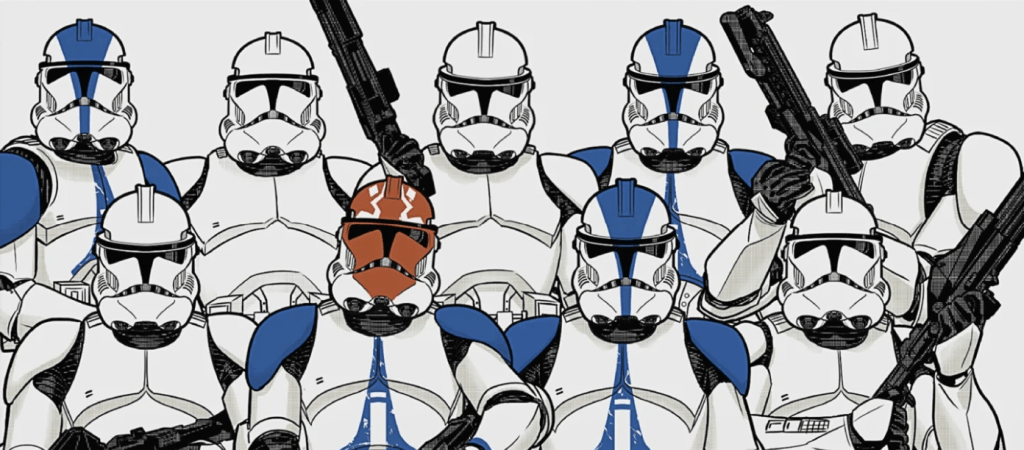
It’s when you lose faith in the project because it is just another copycat. People start sabotaging production because “That’s not what I joined the gamedev industry for!”
But as NAS said, “No idea’s original, there’s nothing new under the sun. It’s never what you do, but how it’s done” (true classics!)
I use Skype vs. Zoom as the example: Skype had every feature Zoom has, and more. But Zoom had better craft thinking behind it. The people who built it cared about the experience in a specific, intentional way.
When that care disappears from a team, motivation follows. People who stop caring about craft usually decide the quality of work doesn’t change the outcome. But give the team context, show that their decisions connect to something real, their specific choices inside a feature or system are visible and valued – and the picture changes. To solve the clone problem, make the team own the craft excellence.
Case #2 was a bit harder to talk about. Layoffs are never easy, no matter how many times you did it (or have been laid off). Layoffs don’t just affect those who were fired, they also make those who stayed to think they will be next.

There’s a particular psychological shift that happens when someone sees a list of names who are gone, or hears enough rumors to start counting. This often leads to a protective withdrawal, when people start doing less out of self-preservation.
The management instinct in this moment is usually to project confidence and positivity. That’s the wrong instinct (and I gave my opinion on this in my previous post). What people actually need is two-way trust. You tell them what you know and what you don’t know, then give them some real control over their own situation (like a small decision to feel the agency). And that keeps people engaged when the environment is uncertain and your reassurances don’t carry the weight they used to.
The third case is about bad reception of the beloved product once it reaches the users. A launch goes badly or a major milestone slips.
Many people on the team will take that personal, but “This release failed” is not the same as “you failed”. I think the solution here is to separate the result from the person, extract the valuable insight (market mismatch, technical decision) and learn from it as a team.
Well, a disastrous release and a capable team are not mutually exclusive and sometimes the manager has to stay clear about which thing they are actually evaluating: the outcome or the people who worked toward it. But this should go separately as complementary things, not necessarily as one leads to another.
And I was happy to validate during our meetup that many top managers actually look at things that way.
The final situation was the one I see most often, and the one teams feel most stuck in. The game has to ship. Scope is locked, deadline is locked, platform requirements are what they are. The destination isn’t up for debate. When the requirements come from the top and the team feel numb, there is one thing that is still in your control – the way you achieve that result.
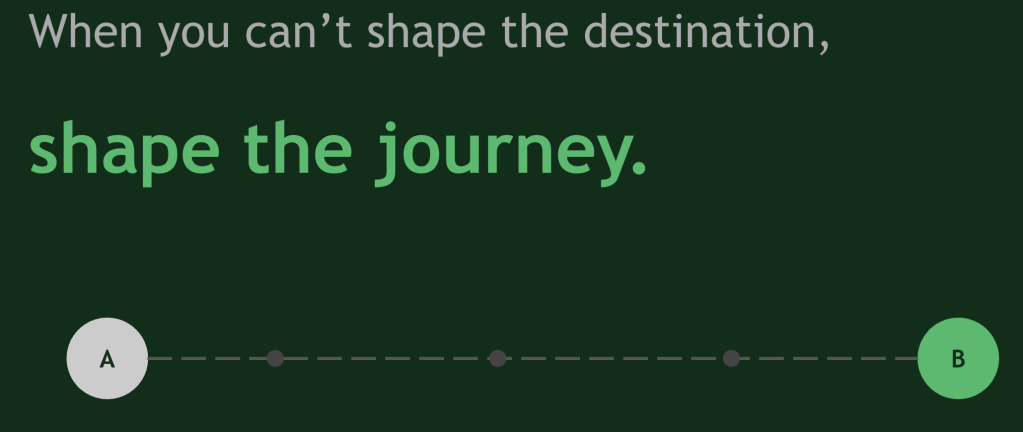
When people can’t shape where they’re going, they need to shape how they get there. Process decisions, ownership over their own feature areas, creative latitude within constraints. The constraints are real. But inside them, there’s still space where people can exercise judgment. A good producer/manager helps people find it.
After running through these four cases with a group of students and working professionals, the synthesis came down to three orientations.
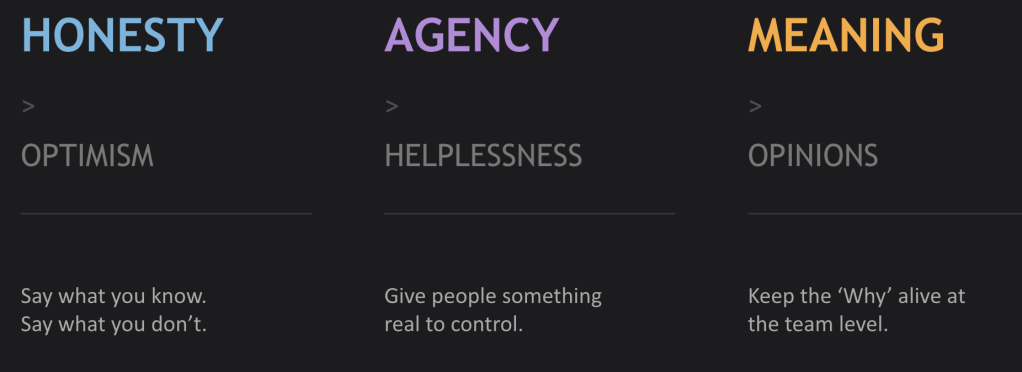
Honesty beats optimism. When things are hard, manufactured positivity makes it worse. People want someone to level with them: what’s real, what’s unknown, what the actual plan is.
Agency beats helplessness. Even small decisions matter. Giving someone ownership over how a retro runs or over solving cross-team dependency is motivating. The form of control matters less than the fact of it.
Meaning beats opinions. What keeps people connected to their work is understanding why it matters, not your performance review of them. If they know why the feature exists and why it’s worth doing well, they’ll do it well. If they only know what you think of their output, they’ll optimize for that instead.
None of this is surprising when you read it!
The hard part is doing it while you’re under the same pressure you’re asking them to absorb. The meetings are quieter than usual and the first thing that goes is your patience for the slow work of keeping people connected to the reason they’re there.
That’s exactly when it matters most to do it anyway.

